LED lighting is often praised for efficiency, long service life, and precise color control. Yet many users notice a different reality: the light may appear warmer at night, cooler after installation, or inconsistent across fixtures. This raises an important question: why do LED lights change color temperature? The answer is rarely limited to one defect. Electrical conditions, heat, aging, dimming systems, optics, and manufacturing differences can all influence what your eyes see.
In practical inspections, a ceiling panel may look neutral near the center but slightly blue beside a window. A warm-white bulb can also shift after several hours of operation, especially inside a poorly ventilated fixture. These changes may be subtle, but they affect comfort, product appearance, photography, and workplace visibility. Understanding the cause requires more than comparing labels such as 3000K or 4000K. Real performance depends on the complete lighting system, not only the LED chip.
This guide examines the top ten reasons behind changing color temperature. It considers thermal stress, phosphor behavior, driver performance, voltage variation, dimming compatibility, and environmental influences. It also separates normal visual adaptation from genuine color instability. Some explanations overlap, and not every symptom has a single answer. That uncertainty matters. Careful testing with identical fixtures, stable power, and a calibrated meter provides more reliable conclusions than visual judgment alone. Even experienced installers can overlook small details. Understanding those details leads to better lighting choices, more accurate maintenance, and fewer unexpected color shifts.
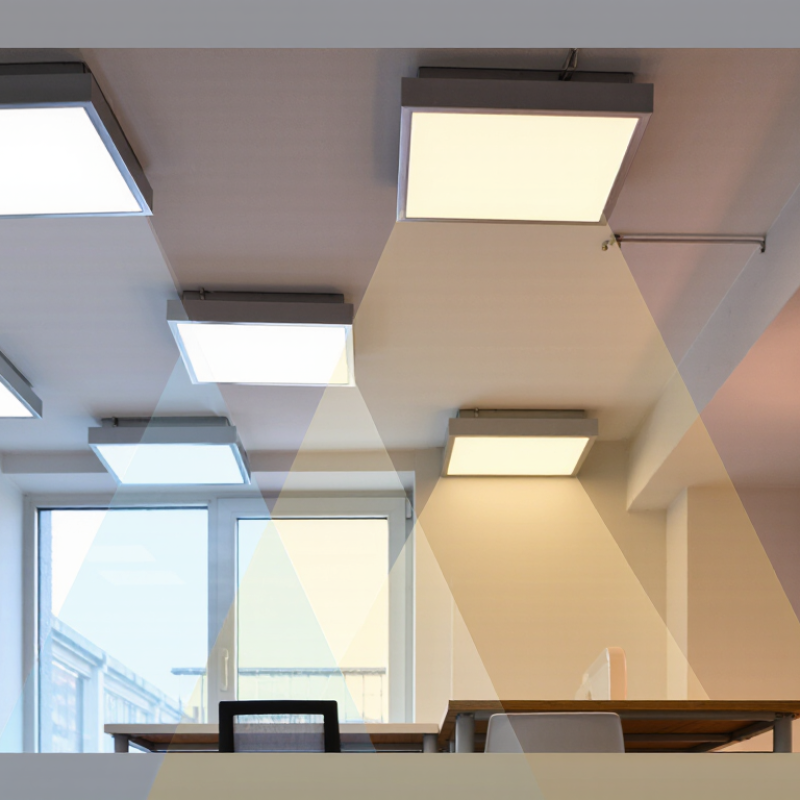
Correlated color temperature, or CCT, describes how white light appears, from warm and amber to cool and bluish. It is measured in kelvins, not degrees Celsius. A lower value looks warmer; a higher value looks cooler. ANSI C78.377-2017 identifies common LED lighting categories from 2700 K to 6500 K. These are useful reference points, not guarantees that two lamps will look identical.
A laboratory estimates CCT from a light source’s measured color coordinates, comparing them with the Planckian locus. The result is a snapshot. ANSI/IES LM-79-19 specifies methods for measuring complete solid-state lighting products, including their color characteristics. A spectroradiometer records the spectrum, often inside a controlled, temperature-stable setup. Small differences in test conditions can affect readings, so one number rarely tells the whole story.
Why can an LED’s appearance change? Heat, dimming settings, driver behavior, and aging materials can shift its color coordinates over time. The U.S. Department of Energy’s 2015 guidance on LED luminaire lifetime treats chromaticity maintenance separately from lumen maintenance. In plain terms, a lamp may remain bright while its white light drifts warmer or cooler. That distinction is easy to miss. CCT alone also does not describe green-magenta tint; checking Duv alongside CCT gives a fuller picture.
An LED’s color temperature can drift as its junction heats during operation.
The junction is the tiny semiconductor region where electrical energy becomes light and heat. Heat builds quietly. That temperature rise can change the LED’s spectrum, while phosphor behavior and the driver also influence the result.
The direction is not identical across designs: some lamps look slightly cooler, others warmer, and a few show little visible change. A quick reading just after switch-on may differ from one taken after thirty minutes.
Heat needs a path out.
On a workbench, a warm aluminum housing, blocked ventilation slots, or a fixture pressed against insulation can trap heat near the LED board. The room matters too. A hot ceiling cavity reduces the temperature difference that carries heat away, while a cool room may help the lamp settle at a different operating point.
For a fair check, measure the same lamp after it has warmed up, using the same dimmer setting and ambient conditions. Use a color meter if small shifts matter; human eyes adapt quickly and can misjudge white light beside a painted wall. I used to blame the diffuser first. Sometimes, the board was simply running hot.
Dimming can change an LED’s apparent color temperature when the lamp and dimmer do not work well together. A low-quality or incompatible driver may struggle to maintain steady current as the dimmer reduces output. The light can look warmer, cooler, or uneven across several lamps. Some LEDs are designed to become warmer when dimmed, so check the product specifications before treating that shift as a fault. Small details matter.
Voltage fluctuations can also expose a driver’s limits. A sound driver usually regulates incoming power, but repeated dips or surges may cause flicker, brightness changes, or visible color shifts. If several lights change at once, note whether it happens when a large appliance starts or when the circuit is heavily loaded. That clue can help an electrician trace the issue. Not always, though.
A failing driver may produce a more localized pattern: one fixture changes color, flickers, or takes longer to stabilize. Heat can worsen the problem, especially in enclosed fittings with poor airflow. Turn the light off and let it cool before checking the fixture, and avoid opening electrical components unless qualified. It is easy to blame the LED itself, but the dimmer, wiring, and driver deserve attention too.
Top 10 Reasons Why LED Lights Change Color Temperature?
Component Changes: LED Aging, Phosphor Degradation, and Batch Variation
LED color drift often begins inside the light engine, not in the room. Heat can accelerate aging in the LED chip, phosphor coating, and surrounding materials. As phosphors degrade, they convert less blue light into longer wavelengths. The resulting white may look cooler, warmer, or slightly greenish, depending on the LED design. Small shifts matter. IES LM-80 testing measures both light output and chromaticity over time. The method requires at least 6,000 hours of testing; 10,000-hour data is commonly recommended. The U.S. Department of Energy’s report, LED Luminaire Lifetime: Recommendations for Testing and Reporting, also treats color maintenance as distinct from lumen maintenance. A lamp can still look bright while its white tone has changed.
Batch variation adds another wrinkle. Phosphor thickness, chip bins, and coating uniformity can differ slightly between production runs. Put two new fixtures side by side on a white ceiling, and one may already appear bluer. Aging then magnifies—or partly masks—those initial differences. Not every shift is predictable. In practice, compare fixtures after warm-up and under the same dimming conditions; record their operating hours and surrounding temperature. These checks are imperfect, but they help separate component aging from installation or control issues. Independent LM-80 data can reveal trends, though it does not guarantee identical color in every finished fixture.
Component changes—including LED aging, phosphor degradation, and production-batch variation—can alter perceived color temperature over time.
How to read: The 1–10 values are a qualitative comparison of potential influence, not measured test results. Actual color shifts depend on LED design, operating temperature, materials, and use conditions.
Top 10 Reasons Why LED Lights Change Color Temperature?
Tunable LED lights can change color temperature when their control settings are misconfigured. A two-channel system mixes warm and cool LEDs, often between 2700K and 6500K. If the controller sends unequal current, the light may appear warmer, cooler, or uneven across fixtures. The U.S. Department of Energy’s 2023 Solid-State Lighting report records laboratory efficacies above 200 lumens per watt, but installation performance depends heavily on drivers and controls. High efficiency does not guarantee stable color.
Wiring creates another common problem. Reversed channels, loose terminals, long cable runs, and voltage drop can reduce output from one LED channel. I have seen a ceiling row shift visibly after one connector became partially loose. It looked like a failed lamp. It was not. Incorrect dimmer pairing can also cause flicker and color movement, especially when phase-cut devices control drivers designed for digital signals. Check the driver’s input range, control protocol, load limits, and minimum dimming level before installation. Small mismatches matter.
Temperature also changes the result. ANSI C78.377 defines chromaticity targets for solid-state lighting, while IES TM-30 evaluates color quality beyond basic CCT. Fixtures installed inside warm, poorly ventilated cavities may shift as components heat. Leave airflow around the driver. Test every scene at full output and low output. A reflective review is useful here: preset values are not always accurate on the wall. Measure the finished installation, not only the specification sheet.
It describes whether white light looks warm, neutral, or cool. Lower Kelvin values look warmer. Higher values look bluer.
A spectroradiometer records the light spectrum in a controlled environment. The measurement compares color coordinates with a reference curve. It is only a snapshot.
Yes. Their tint, phosphor coating, chip grouping, and test conditions may differ. One may look slightly green or blue beside another.
Heat can age the chip, phosphor, and surrounding materials. Phosphor degradation may shift the light warmer, cooler, or greener.
Yes. Brightness maintenance and color maintenance are separate. A lamp may still illuminate a room while its white tone drifts.
Poor ventilation raises internal temperature around the driver and LED. Color may shift after several minutes. Warm cavities deserve attention.
Yes. Incorrect dimmer pairing or uneven channel current can change the light’s appearance. Low-output scenes often reveal the problem.
Loose terminals, reversed channels, long cables, or voltage drop can weaken one channel. A ceiling row may suddenly look uneven. It may not be a failed lamp.
Production batches can vary in phosphor thickness, chip grouping, and coating uniformity. Compare fixtures after warm-up and under identical settings.
Check temperature, operating hours, wiring, driver compatibility, dimming levels, and control settings. Measure the finished installation, not just the specification sheet. Some assumptions will be wrong.
LED color temperature describes whether light appears warm and yellowish or cool and bluish, and is measured in kelvins. If you are wondering why do LED lights change color temperature, several factors can be involved. Heat is one of the most common: high junction temperatures, insufficient cooling, or changes in room temperature can shift the light’s appearance. Electrical conditions matter too. Dimming, unstable voltage, or a poorly matched driver may alter the power supplied to the LEDs and affect their color.
Changes within the light itself can also play a role. As LEDs age, phosphor materials may gradually degrade, while differences between component batches can create noticeable variation. Finally, tunable-light settings, wiring, and compatibility with dimmers or controls may cause unexpected shifts. Checking the operating temperature, power supply, settings, and installation can help identify the cause and keep the light’s color more consistent.

Tverse LED light