How to Choose China Best LED High Bay Lights for Warehouses?

Time:2026-10-29 Author:Oliver
0%

Choosing China’s best LED high bay lights for warehouses begins with the work happening below them. A 12-meter ceiling, narrow picking aisles, reflective packaging, and moving forklifts each change what “good lighting” means. The keyword how to select LED high bay lights for warehouses points to a practical process: assess ceiling height, aisle layout, required illuminance, beam angle, glare, and operating hours before comparing products. Don’t choose by wattage alone. Two fixtures with similar power can produce very different light on a shelf or floor.

Lighting researcher Dr. John Bullough is known for work on lighting and visual performance. A useful buyer’s rule, consistent with that focus, is: “Match the light to the visual task, not just the ceiling height.” Treat that as a guide, not a substitute for a measured layout. Ask suppliers for photometric files, a lighting calculation, warranty terms, driver details, and clear test information. Check whether the proposed spacing leaves dark bands between racks. Look closely at the beam pattern. And verify that controls, sensors, and dimming options suit your shifts. A specification sheet can look impressive. It may still miss the aisle where workers read labels all day. Compare samples or a pilot installation when practical, then review the result on site. Real warehouses are messy; pallets move, dust builds, and layouts change. That is worth admitting before a purchase. A careful comparison helps buyers choose dependable fixtures rather than simply the lowest-priced offer.
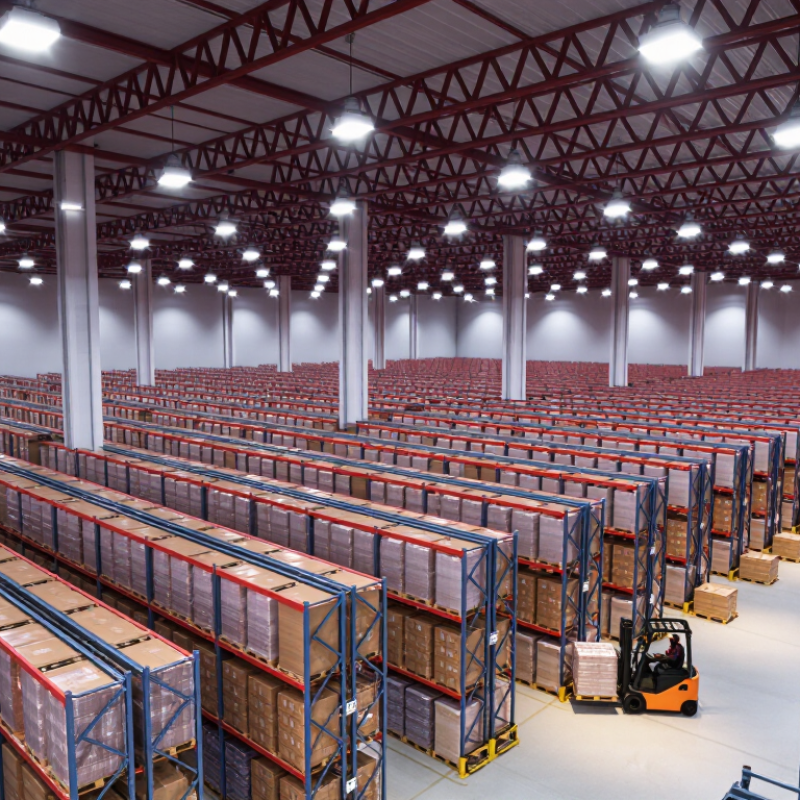
How to Choose China Best LED High Bay Lights for Warehouses?

Assess Warehouse Layout, Ceiling Height, and Lighting Requirements

A warehouse lighting plan should begin with the floor layout, not a fixture catalogue. Mark rack rows, picking aisles, packing benches, loading doors, and areas where forklifts turn. Tall racks can cast deep shadows, while glossy floors may create distracting reflections. Small details matter. Consider beam distribution alongside output: a narrow aisle may need controlled light, while an open staging area benefits from broader coverage.

Ceiling height changes how light reaches workers and stored goods. Measure the mounting height from the floor, then note beams, ducts, sprinklers, and other obstructions. At greater heights, a suitable high-bay optic can help direct light downward without leaving dark gaps between fixtures.

Measure before ordering. A photometric layout can estimate illumination and uniformity, but on-site checks still matter; shelves and stored pallets often differ from the original plan.

Lighting requirements depend on the work being done. Label reading and small-part picking need clear, even illumination, while general storage may require less. Check target light levels, glare, color appearance, and whether sensors suit the operating schedule.

For a China-sourced LED high bay, request test data and confirm that specifications match the actual mounting conditions. One planning detail is easy to miss: a bright floor does not guarantee well-lit shelf faces. Recheck those areas after installation.

Compare LED High Bay Types, Output, Beam Angles, and Color Quality

Choosing warehouse high bays starts with mounting height, aisle width, rack layout, and maintained light levels—not wattage alone. Round UFO fixtures can suit open floors, while linear high bays often distribute light more evenly along long aisles. Compare delivered lumens and efficacy, then review an IES-format photometric file to check light levels between racks. The U.S. Department of Energy’s Energy Saver reports that LEDs use at least 75% less energy and last up to 25 times longer than incandescent lighting; this is a broad comparison, not a direct high-bay fixture test.

Tips: Match the beam to the space. A narrower optic can reduce spill in tall, narrow aisles; a wider beam may help open areas. Verify the layout with a photometric plan before ordering.

Color matters, too. For routine storage, CRI 80 or higher is a practical starting point; choose higher color rendering where staff inspect labels or distinguish wire colors. A 4000K or 5000K color temperature is common in work areas, but test a sample if workers find the light too cool. Use IES RP-7-21 guidance to set task-specific lighting targets. One easy mistake is selecting by lumen output alone: glare, shadows, and uneven shelf lighting can still make a bright warehouse uncomfortable.

Evaluate Chinese Manufacturers, Product Quality, and Certifications

Choosing a Chinese high-bay supplier starts with evidence, not a polished catalog. Ask for factory audit records, component traceability, and a sample using the same driver and LED board as the quoted model. Small details matter. Inspect solder joints, lens clarity, cable glands, and heat-sink finish; these can reveal production consistency.

The International Energy Agency reports that lighting accounts for about 15% of global electricity consumption. Compare delivered lumens per watt using independent fixture-level test results, not advertised LED-chip output. Request an LM-79 photometric report and check that its model number matches the product offered. Review LM-80 and TM-21 data carefully: they estimate LED-package lumen maintenance, not the complete luminaire’s guaranteed lifespan. A paper rating is only part of the picture.

Verify that safety approvals apply to the exact model and destination market. For North American projects, check the relevant UL or ETL listing; for other markets, confirm applicable local requirements. ISO 9001 can indicate a quality-management system, but it does not certify a light’s performance. I would still inspect a pilot batch. Reports cannot reveal every assembly defect, and that uncertainty deserves attention.

How to Choose China’s Best LED High Bay Lights for Warehouses

Use maintained illuminance targets as a starting point when comparing high bay light output and warehouse lighting layouts.

Reference: EN 12464-1:2021 maintained illuminance values: storage areas, 100 lx; loading and unloading areas, 150 lx; packing and dispatch areas, 300 lx. These are task-area benchmarks, not a direct measure of fixture quality. Ask manufacturers for photometric files and test reports for the exact model, and verify that required safety and market certifications apply to the product and destination country. Final lighting design should also account for uniformity, glare, mounting height, and local regulations.

Check Controls, Mounting, and Compatibility with Warehouse Systems

For a warehouse, the right LED high bay is not chosen by wattage alone. Check how its controls fit daily operations. Dimming can reduce output in quieter areas, while occupancy sensors can respond when aisles are empty. Confirm the driver supports the chosen control method, such as 0–10V dimming, and check whether sensors need separate wiring. Small details matter. A control that works in a showroom may behave differently beneath tall racks and moving equipment.

Mounting affects both safety and light distribution. Compare the fixture’s mounting options with the ceiling structure, available clearance, and maintenance access. Then match its beam angle and light output to the mounting height and aisle layout. A narrow beam may suit tall, defined aisles, but can leave darker edges if spacing is poor. Review a lighting layout before ordering; estimates based only on floor area can miss shadows from shelving.

Tips: Ask for the control wiring diagram and confirm compatibility with existing timers, sensors, or building-management systems. Check voltage, dimming range, and connection type against the warehouse setup. If possible, test one fixture in a representative aisle. Look at the floor and rack faces during normal operation. One thing is easy to overlook: staff may prefer a little more light at inspection benches, even when nearby aisles are dimmed. A small trial can reveal that.

Compare Total Cost, Warranty, Efficiency, and Long-Term Support

For a warehouse, compare installed cost, not just the fixture price. Include commissioning, lift rental, wiring changes, and labor during downtime. Calculate annual energy use as watts × operating hours × fixture count ÷ 1,000. The U.S. Department of Energy’s Energy Saver guidance says LEDs use at least 75% less energy and last up to 25 times longer than incandescent lighting. That is a useful broad reference, not a direct comparison with every existing high-bay system. Check each candidate’s measured wattage, delivered lumens, and light distribution; a high lumen-per-watt figure is less useful if aisles remain dim.

Warranty details matter. Confirm the term, covered components, lumen-maintenance threshold, and whether labor or replacement shipping is included. A five-year parts warranty may still leave you paying for a lift and lost work time. Ask for photometric files and test reports, plus written answers about driver and sensor compatibility. Long-term support counts.

Before ordering, request spare-part availability and a realistic lead time for replacements. Model energy savings using your actual operating schedule and electricity rate, then compare payback against maintenance costs. DOE’s incandescent comparison should not be treated as a promise of savings over HID fixtures. Estimates can miss. Warehouse schedules change, and dimming controls may not deliver savings if staff disable them. A small pilot in one aisle can reveal glare, dark spots, and sensor issues before a full installation.

FAQS

What should a warehouse lighting plan consider?

Mark rack rows, picking aisles, packing benches, loading doors, and forklift turning areas. Start with the floor layout.

Why measure ceiling height and obstructions?

Mounting height affects how light reaches workers and stored goods. Note beams, ducts, sprinklers, and maintenance access. Measure before ordering.

How should beam distribution match the warehouse?

Narrow aisles may need controlled beams, while open staging areas benefit from broader coverage. Poor spacing can leave dark edges.

Do all warehouse tasks need the same light level?

No. Label reading and small-part picking need clear, even light. General storage may need less. Check glare and color appearance, too.

Why inspect rack faces after installation?

Bright floors do not guarantee well-lit shelves. Check labels and stored goods from the aisle. Shadows can be easy to miss.

How can controls suit daily warehouse operations?

Dimming can reduce output in quieter areas, and occupancy sensors can respond to empty aisles. Confirm driver, wiring, voltage, and control compatibility.

What should be checked before mounting fixtures?

Match mounting options with the ceiling structure, clearance, and maintenance access. Verify that the beam angle suits the height and aisle layout.

Is a lighting layout enough to confirm performance?

A photometric layout estimates illumination and uniformity, but shelves and pallets can change conditions. Test one fixture in a representative aisle. A first estimate may still miss a shadow.

Conclusion

Choosing the right warehouse lighting begins with understanding the space. Assess the floor plan, ceiling height, rack layout, work areas, and existing light levels to determine how much illumination is needed and where it should fall. When considering how to select LED high bay lights for warehouses, compare fixture types, light output, beam angles, and color quality. The goal is to provide clear, even visibility while limiting dark spots, glare, and unnecessary energy use.

Next, evaluate manufacturers based on product quality, relevant certifications, and clear technical documentation. Check that mounting options, controls, and electrical compatibility suit the warehouse’s existing systems and operating needs. Finally, compare the full cost of ownership rather than purchase price alone: consider energy efficiency, warranty coverage, expected service life, and access to long-term support. A balanced assessment of these factors can help identify a dependable lighting solution that fits both the facility and its budget.

Oliver

Oliver

Oliver is a seasoned marketing professional with a wealth of expertise in driving brand awareness and engagement. With a deep understanding of our company's product offerings, he consistently delivers high-quality content that enriches our professional blog. His insights not only shed light on......