A staircase can feel safe in daylight and become uncertain after dusk. A dim landing, dark tread, or shadowed nosing can hide the next step. These small visual gaps matter, especially when someone is carrying laundry or moving carefully with a handrail. The CDC reports that more than one in four adults aged 65 and older falls each year. Its older-adult falls data also identifies falls as a leading cause of injury in this age group. The World Health Organization’s Falls fact sheet estimates 684,000 fatal falls worldwide each year and 37.3 million falls requiring medical attention. These figures cover falls broadly, not stair accidents alone. Still, they show why everyday visibility deserves attention.
This article explores why LED stair lights enhance safety through five practical considerations: clearer tread edges, more even illumination, reduced reliance on overhead lights, convenient placement, and sensible controls. LEDs can provide steady light along a stair run, helping distinguish one step from the next. A soft glow at the edge can make a difference. Yet brighter is not always better; glare, harsh contrast, and poorly aimed fixtures may distract rather than help. Lighting also cannot replace secure handrails, clear steps, or careful movement. That point is easy to overlook. The guidance here focuses on practical choices, while recognizing that stair design and individual vision vary. Readers can use the five tips to assess their own staircase and identify where darkness, shadows, or confusing step outlines remain.
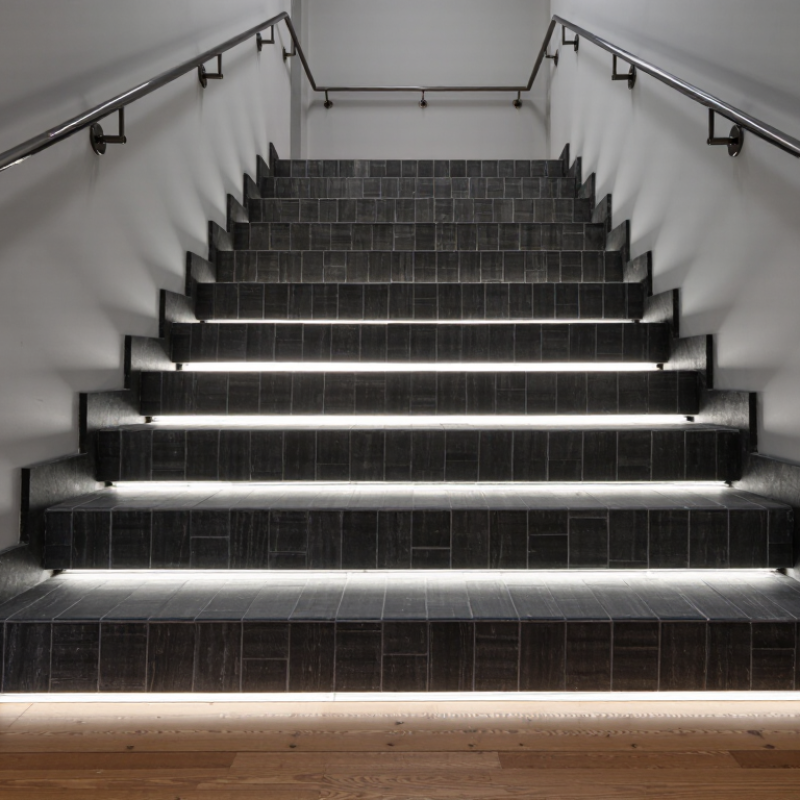
A stair can seem safe in daylight and become difficult to read after dusk. LED stair lights add clear visual cues, helping reveal each tread’s edge and the next step down. A small fixture near the wall can cast light across the walking surface without leaving the center of the tread in shadow. That detail matters when someone is carrying laundry or watching a child.
Even, low-glare lighting is often more useful than a bright spot aimed directly at the eyes. Place lights so their beams overlap gently, especially around landings and turns. Keep the color and brightness reasonably consistent from step to step; sharp changes can make depth harder to judge. Not too bright. A reflective tile or polished wood tread may create glare, so test the lights from both the top and bottom of the stairs before settling on their positions.
LEDs use little energy and can remain on through the evening, while motion sensors may help in areas where lights are otherwise forgotten. But a sensor that switches off too quickly can leave someone halfway down in darkness. Check its timing and detection range, and clean the fixtures occasionally so dust does not soften the light. One overlooked point: lighting cannot fix a loose tread or cluttered stairway. It simply makes those hazards easier to notice.
Bright enough to show each tread edge clearly, but not so bright that reflections hide it. Dark wood may need more light than pale stone. Test it at night.
Warm white can feel comfortable at home, while neutral white may reveal details more crisply. Compare samples on the actual stairs; finishes change how light looks.
Low-level fixtures along a side wall can light the treads and risers without shining into people’s eyes. Aim the beam across the steps or toward the wall.
Yes. Light the landing as well as the steps, so the change in level stays visible. It is easy to overlook.
Turn off other lights and walk upstairs and downstairs. Look for bare LEDs in your line of sight, uneven patches, and shadows from handrails or trim. Adjust spacing if needed.
Not always. A glowing edge can still leave the walking surface dim. Check that both the edge and the area for foot placement are visible.
Inspect them regularly, especially after cleaning or moving furniture. Look for dusty lenses, loose fittings, dim sections, or flickering. Small faults matter.
Trigger sensors from both ends of the stairs and check that timers do not leave steps dark too soon. Keep a simple repair log, even if a few checks get missed. I would still double-check.
Understanding why LED stair lights enhance safety starts with making every step easy to see. A well-planned setup provides enough brightness to distinguish each tread from the riser below it, while a suitable light color creates clear contrast without causing glare. Positioning lights to illuminate step edges and walking surfaces helps people judge where to place their feet, especially in dim areas.
Sensors can switch lights on when someone approaches, and dependable power helps keep the stairs consistently illuminated. Regularly checking the lights, cleaning their surfaces, and replacing faulty components ensures they continue to work as intended. Together, thoughtful brightness, careful placement, reliable operation, and routine maintenance make stairways easier to navigate and help reduce the risk of missed steps or trips.

 Tverse LED light