Selecting the right lighting for your office is crucial. In 2026, the options for LED lights have significantly expanded. Whether you’re redesigning a workspace or simply upgrading, knowing how to select LED lights for office spaces can greatly impact productivity and employee well-being.
Investing in quality LED fixtures is about more than aesthetics. It's about creating an environment that fosters focus and creativity. Think about color temperature. Warmer lights can evoke a calm atmosphere, while cooler tones boost alertness. Don’t forget about energy efficiency; the right LEDs can reduce long-term costs significantly.
However, the selection process isn't always straightforward. Different spaces require different approaches. A bright conference room may need harsher lighting, while cozy break areas benefit from softer hues. Reflect on the specific needs of your work environment before making a decision. Each choice carries its own importance and can either uplift or detract from the overall workspace experience.
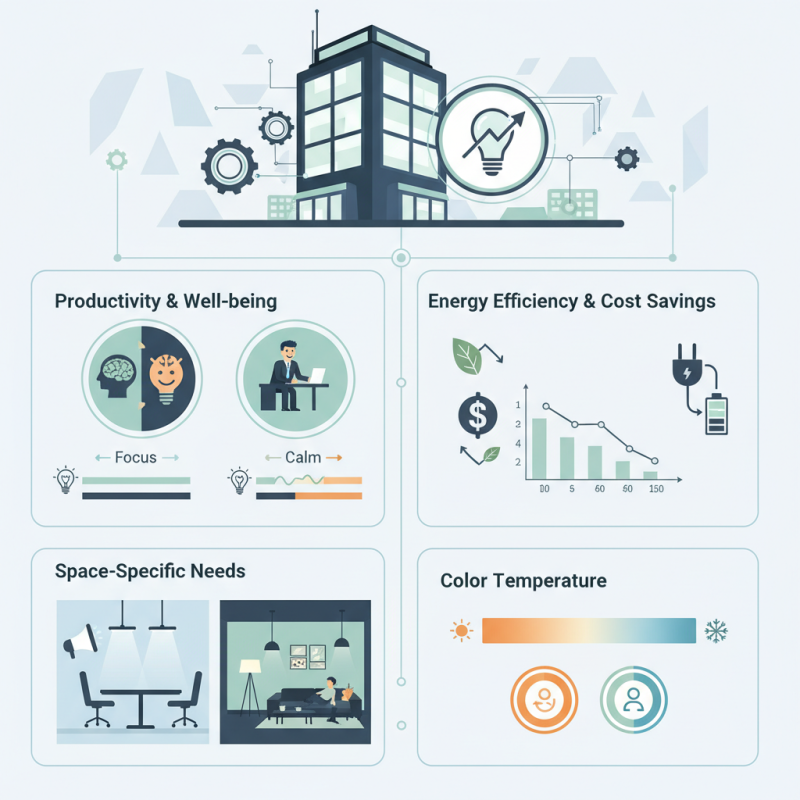
Factors to Consider When Choosing LED Lights for Office Spaces
When selecting LED lights for your office space, several factors warrant careful consideration. Brightness is crucial, as studies show that well-lit environments can enhance productivity by up to 20%. Office spaces typically benefit from a color temperature of 4000K to 5000K, which mimics natural daylight. This range promotes alertness and focus among employees, making it a sensible choice.
Energy efficiency is another critical aspect. According to the U.S. Department of Energy, LED lights use at least 75% less energy than incandescent bulbs. This means lower electricity bills and a reduced carbon footprint—essential considerations for modern workplaces aiming for sustainability. It’s worth noting that some LED options may have a higher upfront cost, but savings will accumulate over time through reduced energy consumption.
Light distribution and adjustability also play a significant role in creating a pleasant work environment. Uniform light distribution minimizes glare and shadows, improving visibility. Additionally, adjustable lighting solutions allow employees to customize their workspace. Empowering employees in such ways increases comfort and, subsequently, productivity. Balancing all these factors can prove challenging, but it is necessary to ensure an optimal office lighting setup.
Factors Impacting the Selection of LED Lights for Office Spaces in 2026
Types of LED Lights Suitable for Different Office Areas
Selecting the right LED lights for office spaces in 2026 requires understanding the types suited for various areas. Different tasks demand different lighting conditions. According to the U.S. Department of Energy, effective office lighting can improve productivity by up to 20%.
For collaborative areas, like meeting rooms, use adjustable LED lights. These lights can change brightness levels. They also allow for various color temperatures, enhancing focus during discussions. In contrast, general work areas benefit from cooler lights, around 4000K to 5000K, which can help reduce eye strain. A study by the International Energy Agency found that employees are 30% more alert under these conditions.
Rest areas need a softer touch. Warm white LED lights create a relaxing environment. These spaces promote breaks and downtime. While most offices focus on functional lighting, it’s important to recognize the impact of ambiance. Poor lighting can lead to decreased morale and creativity. In 2025, light pollution became a significant concern. Companies must reflect on their choices. The balance between efficiency and comfort is crucial.
Energy Efficiency and Cost Savings of LED Lighting
When selecting LED lights for your office in 2026, energy efficiency and cost savings emerge as top priorities. According to the U.S. Department of Energy, LED lighting can reduce office energy use by up to 85% compared to traditional incandescent options. This significant reduction not only lowers utility bills but also decreases the overall carbon footprint of your workspace. To put it into perspective, switching to LEDs can save a medium-sized office up to $12,000 annually in energy costs.
Consider the lifespan of LED lights. They typically last up to 25,000 hours, which is about 25 times longer than incandescent bulbs. This longevity means fewer replacements and lower maintenance expenses. However, it's crucial to assess the initial investment against long-term savings. While LED lights might cost more upfront, the energy savings and reduced replacement frequency balance this expense over time.
Tip: Choose LEDs with a Color Rendering Index (CRI) above 80 for optimal visual comfort. High CRI lights enhance productivity and well-being.
Tip: Invest in smart lighting controls to maximize energy efficiency. Dimming and scheduling features can further reduce energy consumption during off-peak hours.
When selecting fixtures, consider the purpose of each space. Too bright can be harsh; too dim can lead to strain. The right balance is essential for creating an inviting office atmosphere while still achieving energy efficiency.
How to Select LED Lights for Your Office Space in 2026? - Energy Efficiency and Cost Savings of LED Lighting
| Category |
Specification |
Energy Efficiency (Lumens/Watt) |
Average Lifespan (Hours) |
Cost per Unit ($) |
Estimated Annual Energy Cost ($) |
| Standard LED |
10W, 800 Lumens |
80 |
25,000 |
12 |
10 |
| High Output LED |
20W, 1600 Lumens |
80 |
25,000 |
20 |
16 |
| Smart LED |
15W, 1200 Lumens |
80 |
25,000 |
25 |
13 |
| Retrofit LED |
18W, 1500 Lumens |
83 |
30,000 |
22 |
11 |
Impact of Color Temperature on Office Ambiance and Productivity
The color temperature of LED lights plays a crucial role in shaping the ambiance of your office space. Warmer tones around 2700K create a cozy, inviting environment. This promotes a sense of relaxation and comfort, ideal for break rooms or collaborative areas. Colder tones, like 5000K, mimic daylight. They enhance alertness and focus, making them suitable for workstations where concentration is vital.
It's essential to reflect on how these color temperatures affect productivity. A study showed that employees exposed to cooler light reported higher energy levels. However, too much cold light can lead to fatigue and discomfort over time. Balancing different color temperatures can help create dynamic spaces that cater to varying tasks throughout the day.
Consider incorporating adjustable lighting solutions. Employees can fine-tune their environments to match their tasks and moods. This personalization fosters a sense of ownership over the workspace. Ultimately, understanding color temperature allows for optimization of both ambiance and productivity, promoting a healthier work atmosphere.
Future Trends in LED Technology for Office Environments
As we look to 2026, the evolution of LED technology promises to redefine office environments significantly. Energy efficiency remains paramount. LEDs will consume even less power, contributing to greener workplaces. Their lifespan will continue to extend, reducing waste and maintenance needs.
Smart lighting systems will become commonplace. These systems adjust brightness based on natural light, improving comfort and productivity. Truly, this technology will redefine how we interact with our workspace. Consider the potential for personalized lighting settings. Employees might enjoy tailored experiences that promote well-being.
However, not all advancements are without challenges. Integrating smart technology may require infrastructure updates. Not every company may afford these renovations. Ensuring consistent reliability in smart systems remains an obstacle, too. Transitioning to these technologies will need careful assessment. Offices must balance innovation with practical application. The road to a smarter office is complex and requires thoughtful execution.
FAQS
: A brightness level of 4000K to 5000K is recommended to mimic natural daylight.
LED lights use at least 75% less energy than incandescent bulbs, reducing overall costs.
Uniform light distribution minimizes glare and shadows, enhancing visibility for employees.
Adjustable LED lights are ideal as they allow for changing brightness and color temperatures.
Effective LED lighting can boost productivity by up to 20%, improving focus and alertness.
Warm white LED lights create a calming atmosphere, promoting relaxation and breaks.
Some LEDs have higher upfront costs, but offer long-term savings through low energy use.
Adjustable lighting allows customization, which increases comfort and can enhance productivity.
Poor lighting choices can lead to light pollution, affecting morale and creativity within workspaces.
Finding the right balance is essential for creating an optimal and productive office environment.
Conclusion
When considering how to select LED lights for office spaces in 2026, it’s essential to evaluate several factors that impact both functionality and aesthetics. Key aspects include the types of LED lights that best suit different areas of the office, such as task lighting for workstations and ambient lighting for collaborative spaces. It’s crucial to prioritize energy efficiency, as LED lighting not only reduces electricity costs but also contributes to a more sustainable workplace environment.
Additionally, understanding the impact of color temperature on office ambiance can significantly affect productivity and employee satisfaction. Warmer tones may create a relaxed environment, while cooler tones can enhance focus and alertness. Staying informed about future trends in LED technology, such as smart lighting and tunable white LED systems, will help businesses make informed decisions that align with both current needs and future advancements in office design.

 Tverse LED light