Why Choose LED Lights for Outdoor Gardens?

Time:2026-10-10 Author:Oliver
0%

Outdoor gardens deserve lighting that is efficient, durable, and visually controlled. The U.S. Department of Energy reports that LED bulbs use at least 75% less energy than incandescent lighting and can last up to 25 times longer. ENERGY STAR guidance also highlights lower maintenance and reduced replacement frequency. For a pathway, that difference means fewer ladder trips and more reliable light after rain, frost, or heavy summer use.

Night gardens change. Light affects plants, wildlife, neighbors, and human comfort. Well-designed LEDs can reveal stone steps, illuminate a pond edge, and create warm pools beneath trees without flattening the entire landscape. The Illuminating Engineering Society recommends considering brightness, glare, color quality, and visual hierarchy in outdoor applications. CIE 150:2017 also provides guidance for limiting obtrusive light beyond property boundaries. These principles make fixture placement as important as wattage.

Learning how to choose LED lights for outdoor gardens requires more than selecting the highest lumen rating. Check the fixture’s IP protection rating under IEC 60529, confirm its color temperature, and match beam spread to the planting area. Warm white light, commonly around 2700K to 3000K, often suits residential gardens better than harsh blue-white output. Look for credible safety certifications and weather-rated housings. My own practical caution is simple: a beautiful fixture can still fail when its cable connectors remain exposed. Small details matter. The best system balances energy savings, safe installation, biological sensitivity, and the garden’s changing appearance through every season.
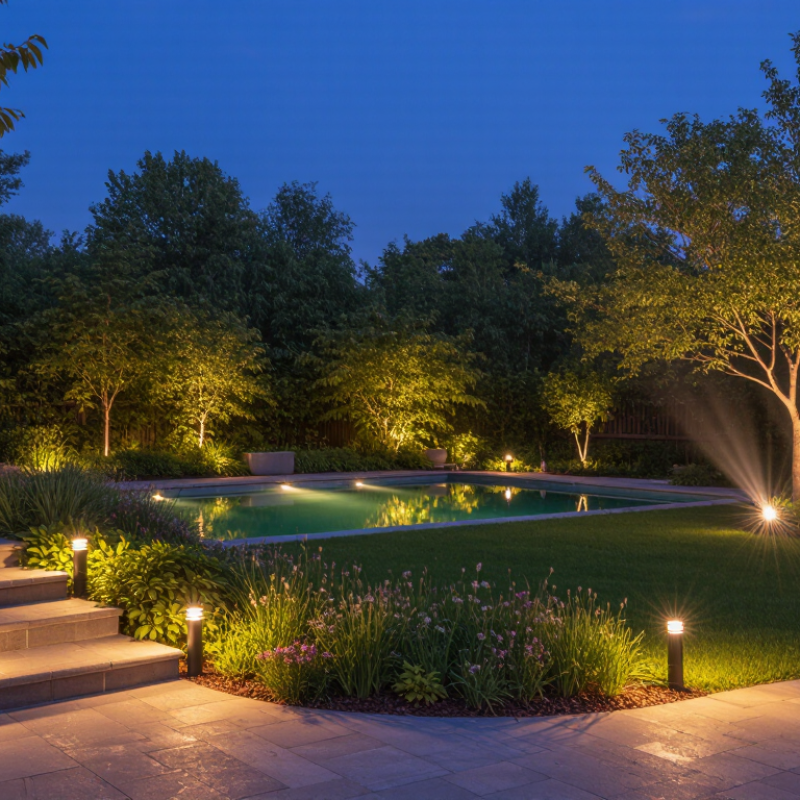
Why Choose LED Lights for Outdoor Gardens?

What Are LED Lights for Outdoor Gardens?

LED lights for outdoor gardens are solid-state lighting devices that produce light through semiconductor diodes. Unlike incandescent bulbs, they do not rely on a heated wire. Garden versions usually appear in path lights, spotlights, wall fixtures, or small string systems. Many use low-voltage power, making installation more manageable around planting beds and seating areas. Their housings should also resist moisture, dust, and accidental splashes.

A useful detail is the fixture’s IP rating. Higher ratings generally offer stronger protection against water and particles, but placement still matters. A light under a dense shrub may collect soil, leaves, and standing moisture.

I have found that warm white light, around 2700–3000K, reveals stone paths without making foliage look harsh. Cooler light can expose texture, yet it may feel clinical at night. That choice is easy to underestimate.

The U.S. Department of Energy reports that LEDs use at least 75% less energy and can last up to 25 times longer than incandescent bulbs. ENERGY STAR testing also emphasizes controlled light distribution and reduced operating costs for qualified products. These figures support LED use in gardens where lights operate every evening. However, real performance depends on heat management, wiring, weather exposure, and driver quality. A poorly sealed fixture can fail early. The technology is efficient, not maintenance-free.

How Do LED Garden Lights Work?

Why Choose LED Lights for Outdoor Gardens?

LED garden lights work through a semiconductor called a light-emitting diode. When controlled electric current passes through it, electrons release energy as photons, creating visible light. A small driver regulates voltage and protects the diode from electrical changes. The fixture’s lens then shapes the beam across paths, flower beds, or steps. It is a precise process, not simply a brighter bulb.

The U.S. Department of Energy reports that LED lighting can use up to 75% less energy than incandescent lighting. ENERGY STAR data also indicates that quality LED products can last up to 25 times longer. These figures matter outdoors, where replacing lamps may mean wet soil, ladders, or damaged planting. In practical installations, a timer or photocell limits operation to needed hours. A heat sink also moves heat away from the diode, because excessive heat can reduce performance and shorten service life.

Light color affects the garden’s appearance. Warm white illumination can reveal stone textures without making leaves look harsh. Narrow optics highlight a tree trunk, while wider lenses create softer path lighting. I once assumed higher brightness always improved safety. That assumption is incomplete. Glare can hide steps and disturb nearby wildlife. IP ratings, cable protection, drainage, and correct positioning deserve equal attention. Manufacturer claims still need checking against test standards and local outdoor-use requirements.

Why Choose LED Lights for Outdoor Gardens? How Do LED Garden Lights Work?

Estimated annual electricity use for 10 garden lights operating 6 hours per day, based on typical power ratings and 365 days of operation. LED garden lights use a semiconductor diode to convert electrical energy into light, requiring less power and producing less heat than traditional lamps.

What Benefits Do LED Lights Offer in Outdoor Gardens?

LED lights offer practical benefits in outdoor gardens, especially where lighting runs for several hours each evening. They use less electricity than many traditional lamps, which can reduce operating costs over time. Their long service life also means fewer ladder trips for replacing bulbs. I have found this useful around raised beds, paths, and quiet seating areas. LEDs produce little heat, so nearby leaves and delicate garden features face less thermal stress.

Control is another advantage. Timers, dimmers, and motion sensors can adjust light according to real garden activity. Warm light, usually around 2700K to 3000K, creates a softer atmosphere and is often more comfortable near patios. Narrow beams can highlight tree bark or stone edges without flooding the entire yard. However, brighter is not always better. Excessive glare can disturb people, insects, and nocturnal wildlife.

Outdoor performance depends on proper installation, not just the light source. Choose fixtures rated for outdoor exposure, protect connections from moisture, and follow local electrical requirements. A qualified electrician should handle permanent wiring. I once placed a path light too close to a sprinkler, and corrosion appeared sooner than expected. That mistake reminded me to inspect seals and drainage regularly. LEDs still need thoughtful placement, cleaning, and occasional replacement of drivers. Their efficiency helps, but careless design can waste light and create harsh shadows.

How Should LED Lights Be Selected for Different Garden Areas?

Why Choose LED Lights for Outdoor Gardens?

How Should LED Lights Be Selected for Different Garden Areas?

LEDs suit gardens because they use at least 75% less energy than incandescent lamps and can last up to 25 times longer, according to the U.S. Department of Energy. However, efficiency alone should not decide placement. A bright fixture beside a bedroom window can create glare, waste energy, and disturb nearby wildlife.

For pathways, choose low-output fixtures with wide, soft beams. They should reveal edges without producing a runway effect. Steps need clearer contrast, so shielded lights with controlled downward output work better. Seating areas benefit from warm light, usually around 2700–3000K, which feels less harsh on skin and plants. In planting beds, narrow beams can highlight trunks, textured leaves, or stone features. Avoid aiming light directly into eyes. CIE 150:2017 recommends controlling outdoor obtrusive light, especially near homes and sensitive environments.

Tips: Check lumens, beam angle, color temperature, and IP rating together. Use timers or motion controls where practical. Keep fixtures away from ponds unless their safety rating supports wet locations.

From field experience, the “right” brightness is often lower than expected. I still sometimes over-light a sample garden during testing. That mistake is useful. Walk the space after dark, view it from windows, and adjust one fixture at a time. A beautiful garden should show depth, not every leaf.

What Safety and Maintenance Practices Extend LED Light Performance?

LED lights suit outdoor gardens because they use little energy and produce consistent illumination. Their cool operation also reduces heat near leaves, mulch, and wooden features. In my experience, dependable performance begins with choosing fixtures rated for outdoor exposure, not simply selecting the brightest option.

Safety needs regular attention. Turn off the power before cleaning, moving, or opening any fixture. Use outdoor-rated cables, sealed connections, and protection against ground faults. Keep plugs above wet soil and away from irrigation spray. Never place a light underwater unless its enclosure is specifically rated for submersion. Buried cables should follow local electrical requirements, with sufficient depth and visible warning tape where appropriate. A qualified electrician should inspect unfamiliar wiring.

Maintenance is simple, but easy to neglect. Wipe lenses with a soft, damp cloth every few months. Remove leaves that block ventilation or trap moisture around housings. Check for cracked seals, loose stakes, exposed copper, flickering, or corrosion after storms. Replace damaged parts promptly. Do not rely on tape as a permanent repair. I once ignored a small amount of condensation inside a lens, assuming it would disappear. It did not. The light later failed, and the connector required replacement. Timers and photocells also need seasonal adjustment, especially when plant growth changes the shaded areas. Record inspections in a small notebook, though real gardens rarely stay as orderly as planned.

Why Choose LED Lights for Outdoor Gardens? - What Safety and Maintenance Practices Extend LED Light Performance?

Evaluation Dimension Recommended Practice or Typical Data Safety and Performance Benefit Maintenance Guidance Suggested Frequency
Energy Efficiency Quality outdoor LED fixtures commonly provide approximately 70–120 lumens per watt, depending on design, optics, and operating conditions. Uses less electricity than many traditional garden lighting technologies while providing directional illumination with lower heat output. Keep lenses, reflectors, and solar panels free from dust, leaves, and mineral deposits so light output is not reduced. Every 3–6 months
Service Life Many outdoor LED products are rated for approximately 25,000–50,000 operating hours, subject to temperature, power quality, and installation conditions. Reduces the frequency of lamp replacement and helps lower maintenance work in planted or difficult-to-access areas. Investigate flickering, delayed start-up, dark sections, or noticeable dimming instead of waiting for complete failure. Inspect annually
Weather Resistance Use fixtures with an appropriate Ingress Protection rating. IP65 resists dust and water jets; IP67 provides temporary immersion protection when specified by the manufacturer. Helps protect electrical parts from rain, irrigation spray, dust, and accidental exposure to standing water. Check seals, gaskets, cable entries, and housing for cracks or water intrusion. Do not rely on an IP rating if the enclosure has been damaged. Before wet seasons
Electrical Safety Use outdoor-rated cables, connectors, transformers, and junction boxes. Low-voltage systems are commonly designed around 12 V or 24 V, according to the system specification. Reduces the risk of electric shock, short circuits, overheating, and damage caused by unsuitable components. Switch off power before cleaning or servicing. Replace frayed cables, loose connectors, and damaged insulation immediately. Check twice yearly
Ground-Fault Protection Outdoor circuits should be protected by a properly installed ground-fault device where required by local electrical regulations. Helps disconnect power quickly when leakage current is detected, especially in damp garden environments. Test the protective device using its test function according to local requirements and the device instructions. Monthly or as required
Thermal Management LED performance declines when operating temperatures rise excessively. Fixtures should have adequate ventilation and a heat-dissipating housing. Controls heat buildup, helping preserve LED output, driver reliability, and service life. Do not bury fixtures, cover heat sinks with mulch, or place housings directly against dense vegetation. Remove leaves and debris around the fixture. Seasonally
Light Distribution Select beam angles and mounting heights according to the target area. Narrow beams emphasize trees and features; wider beams provide more uniform pathway coverage. Improves visibility while reducing glare, wasted light, and poorly illuminated walking areas. Realign fixtures after storms, landscaping work, or soil movement. Keep light directed toward paths and garden features rather than windows or roads. After landscape work
Glare and Light Pollution Use shielding, louvers, lower mounting positions, and warm color temperatures—often around 2,700–3,000 K—for a softer garden appearance. Improves visual comfort and reduces unwanted light entering homes or affecting neighboring properties and wildlife. Check the installation from normal viewing positions at night and adjust aim, shielding, or brightness when glare is visible. At night after installation
Moisture and Drainage Install fixtures on stable surfaces with suitable drainage. Avoid placing cable connections in low points where water can collect. Reduces corrosion, water ingress, ground movement, and repeated electrical faults. Keep connectors elevated where possible and use approved weatherproof connection methods. Remove standing water around in-ground fixtures. After heavy rain
Cleaning Method Use a soft, damp cloth and mild soapy water. Avoid abrasive pads, strong solvents, and high-pressure water directed at seals or connections. Preserves optical clarity and housing finishes without damaging protective coatings or waterproof seals. Clean only when the fixture is cool and disconnected from power. Dry the lens and housing before restoring operation. Every 3–6 months
Driver and Voltage Stability Use a compatible driver or transformer with sufficient capacity and avoid operating continuously beyond its rated load. Helps prevent flicker, overheating, premature driver failure, and inconsistent brightness across the garden. Inspect for buzzing, excessive heat, discoloration, or repeated circuit trips. Have electrical faults checked by a qualified professional. Annually or after faults
Seasonal Protection Protect fixtures from snow accumulation, ice pressure, falling branches, lawn equipment, and direct contact with de-icing chemicals. Limits mechanical damage, corrosion, blocked drainage, and accidental cable cuts. Trim vegetation near fixtures, clear snow without striking housings, and inspect the system after storms or freezing conditions. Each season
Smart Controls and Dimming Timers, photocells, motion sensors, and dimming controls can reduce unnecessary operating hours when correctly matched to the LED driver. Reduces energy consumption and limits operating hours, which can support longer system life. Verify schedules, sensor range, battery condition, and automatic shutoff functions. Avoid incompatible dimmers that cause flicker. Every 3 months
Professional Servicing Electrical repairs, circuit modifications, underground cable work, and persistent ground-fault problems should be handled by a qualified electrician. Ensures compliance with local electrical requirements and reduces the risk of shock, fire, or damage to connected equipment. Keep installation records, circuit details, product specifications, and inspection findings for future troubleshooting. When required

Note: Performance figures are typical industry ranges rather than guarantees. Actual results depend on fixture quality, ambient temperature, installation design, power supply, weather exposure, and local electrical requirements.

FAQS

How do LED garden lights create visible light?

An LED uses a semiconductor. Controlled electricity moves electrons, which release energy as visible photons. A driver regulates voltage. The lens shapes light across paths, steps, or flower beds.

Why can LED garden lights reduce energy use?

LEDs can use up to 75% less energy than incandescent lamps. Timers and photocells prevent unnecessary operation. Lower consumption may reduce running costs over time.

How long can outdoor LED lights last?

Quality LED products can last up to 25 times longer than traditional lamps. Fewer replacements mean fewer ladder trips and less disturbance around planted areas. Drivers may still fail earlier.

What light color works well in a garden?

Warm white light, around 2700K to 3000K, usually feels softer near patios. It can reveal stone texture without making leaves look severe. Color preference remains personal.

Should garden lighting always be as bright as possible?

No. Excessive brightness can create glare, harsh shadows, and hidden steps. Narrow beams suit tree trunks, while wider lenses provide gentler path lighting. Brighter is not automatically safer.

How can outdoor LED lights be protected from moisture?

Choose fixtures rated for outdoor exposure. Use sealed connections, protected cables, and suitable drainage. Keep plugs above wet soil and away from sprinkler spray. Small details matter.

What maintenance do LED garden lights need?

Turn off power before cleaning or opening fixtures. Wipe lenses with a soft, damp cloth every few months. Remove leaves, inspect seals, and check for flickering, corrosion, or exposed copper.

What should I do if condensation appears inside a light?

Treat condensation as a warning, not a harmless detail. Turn off power and inspect the seal, connector, and housing. Replace damaged parts promptly. Tape is not a permanent repair. I once ignored this problem. The light later failed.

Conclusion

LED lights for outdoor gardens are energy-efficient lighting fixtures designed to illuminate paths, plants, patios, water features, and other landscape areas. They create light when an electrical current passes through semiconductor materials, producing less heat and using less energy than many traditional bulbs. Their long service life, flexible designs, instant brightness, and resistance to frequent switching make them a practical choice for outdoor spaces. They can also improve garden visibility, highlight architectural features, and create a comfortable atmosphere after dark.

When learning how to choose LED lights for outdoor gardens, consider brightness, color temperature, beam direction, weather resistance, power requirements, and installation location. Soft, warm light suits seating areas, while brighter or cooler light may be better for paths and security-focused zones. Proper spacing helps prevent glare and uneven illumination. To extend performance, use fixtures with suitable outdoor protection, keep lenses and solar panels clean, inspect cables and connections regularly, and remove leaves or moisture buildup. Periodic checks can maintain safe, reliable, and attractive garden lighting throughout the seasons.

Oliver

Oliver

Oliver is a seasoned marketing professional with a wealth of expertise in driving brand awareness and engagement. With a deep understanding of our company's product offerings, he consistently delivers high-quality content that enriches our professional blog. His insights not only shed light on......